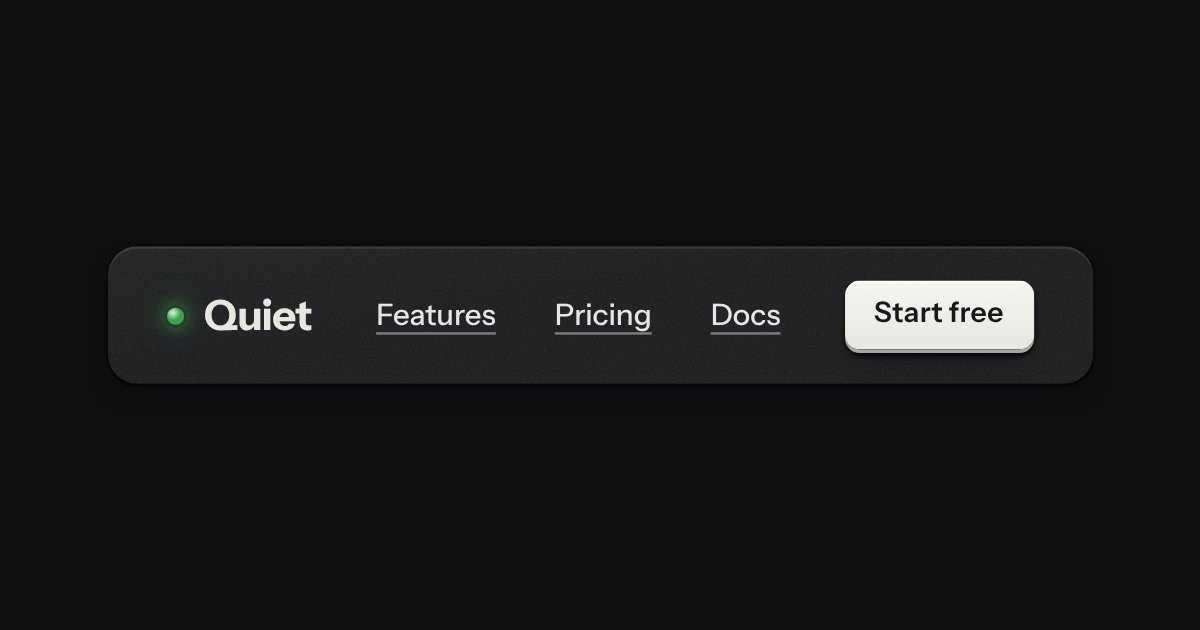
Bar
The top of a page: a wordmark with a lamp, printed links, and one contrast key at most.
Templates
A two-deck DJ mixer made only of kit parts, on a Tactile page. A deck either side holds a loop made in the page as you listen, house on one and a broken beat on the other, with Play, Back to the first bar, Match to the other deck, its tempo on an LCD, a long pitch fader, a lamp for each beat of its four bars and a lamp for each part of the loop as it plays. Between them each channel has a trim, three EQ knobs with a kill key each, a cue key, its fader and an upright LED ladder; the middle has the master level, stereo master ladders, Listen to Master or Cue, Channel meters To master or Input, and the crossfader with its curve (Smooth, Linear or Cut). Every control changes the sound and the ladders together; nothing sounds until Play, and with Sound off the ladders still read both decks. Twelve finishes, both volumes, keyboard and reduced motion; on a phone the decks stack and the crossfader stays at the foot of the screen.
The top of a page: a wordmark with a lamp, printed links, and one contrast key at most.
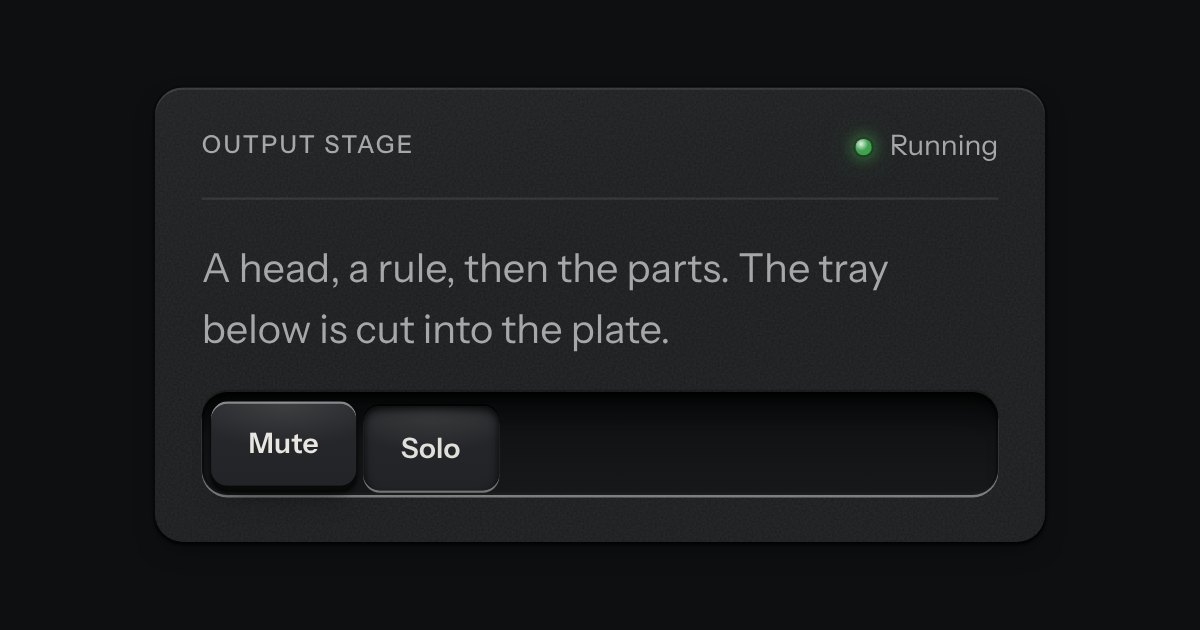
A face plate that groups what belongs together: a head, a rule, then the parts. Screws only on device-like panels.
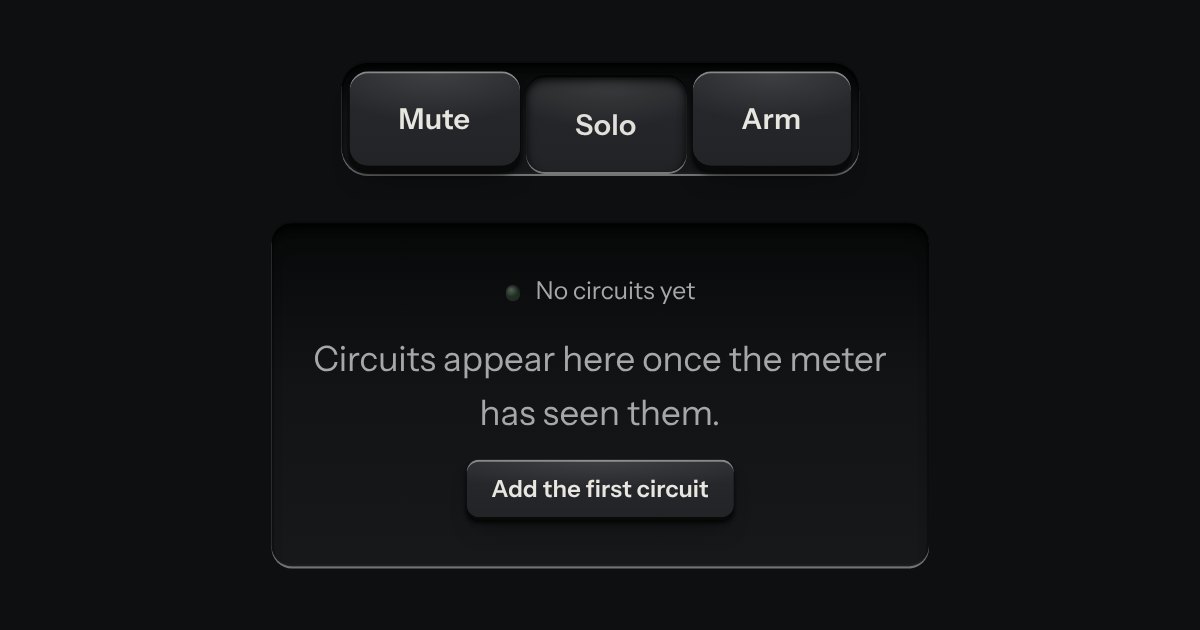
A recess cut into the plate that holds other parts: keys, a selector, an empty state waiting for its first thing.
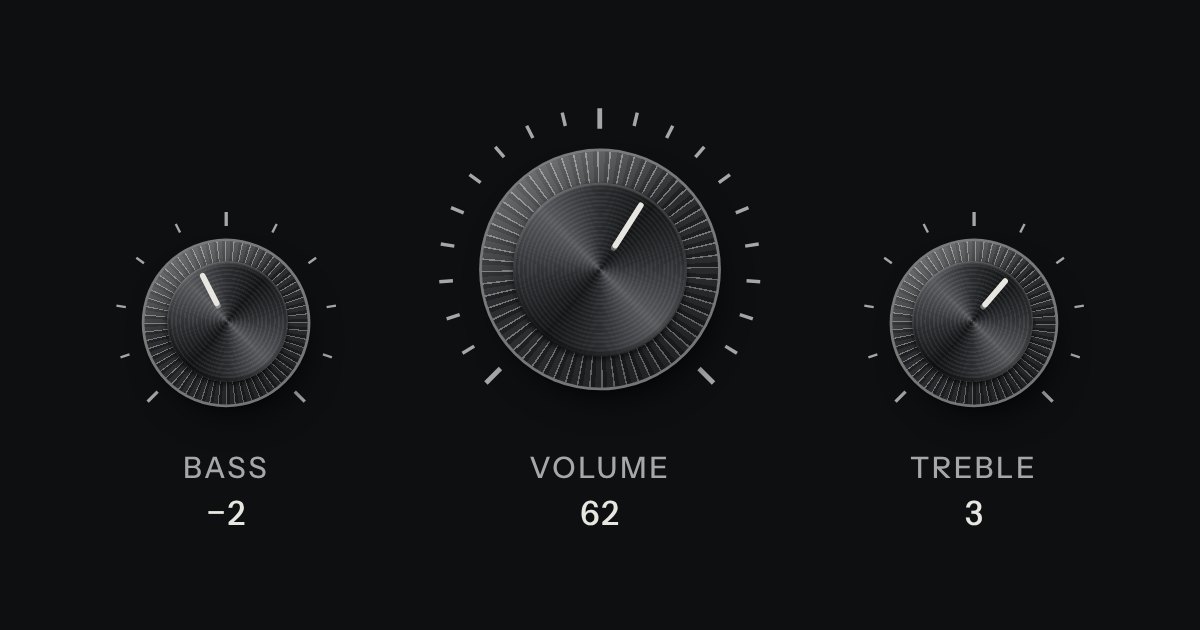
A rotary control for continuous or stepped values where space is square. Its knurl and pointer turn; its light does not.
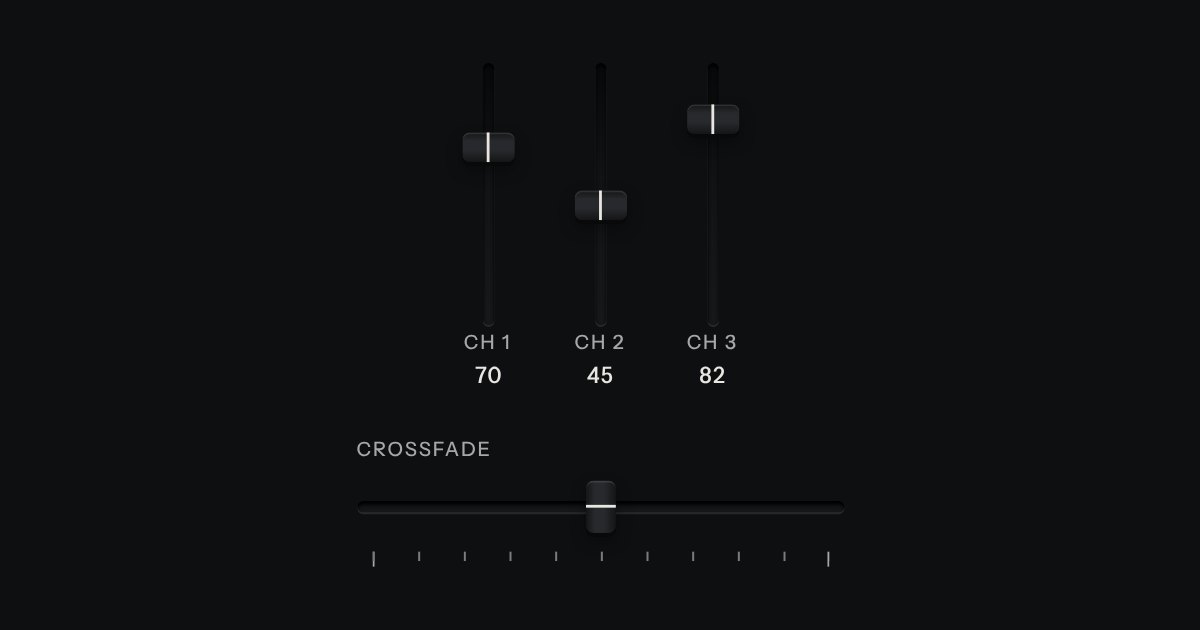
A continuous value along a line: a native range whose cap rides in a slot cut into the plate, with a printed scale.
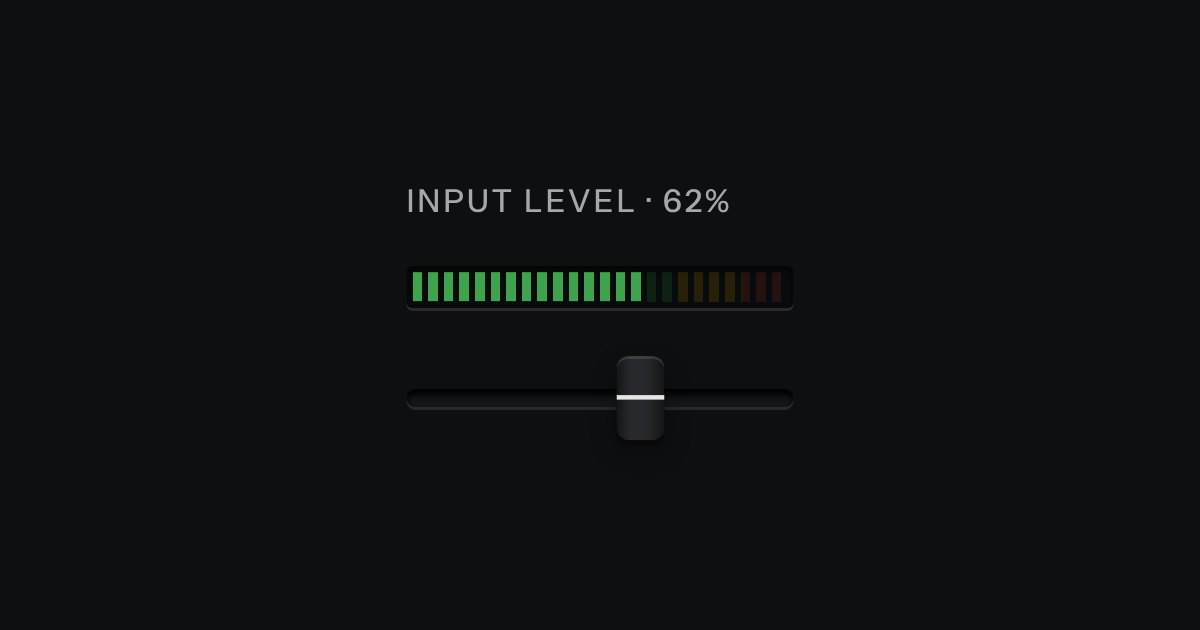
An LED ladder for levels and load: green, then amber, then red, the way a recording level has always been read.
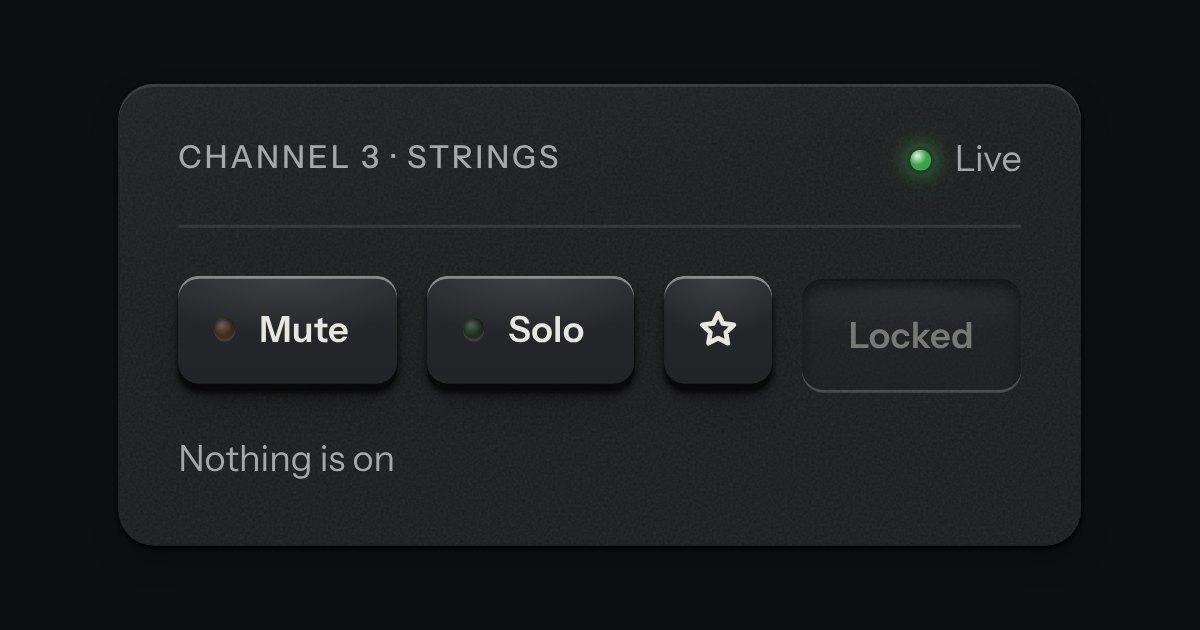
One key that latches below the plate and stays there. It is the kit’s own key with one state to keep, down or up, so it is the way to say mute, pin, bold or armed without the weight of a switch. A lamp in the cap may light while it is down.
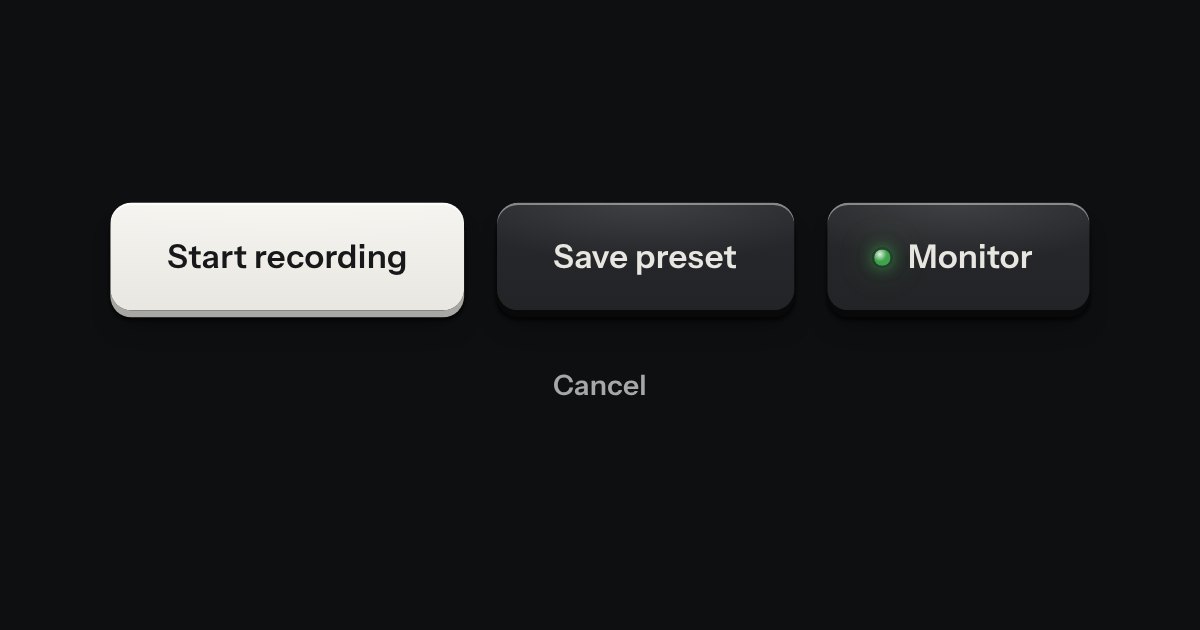
Every button, and every link that acts like one: a cap on a skirt that drops below the plate when pressed.
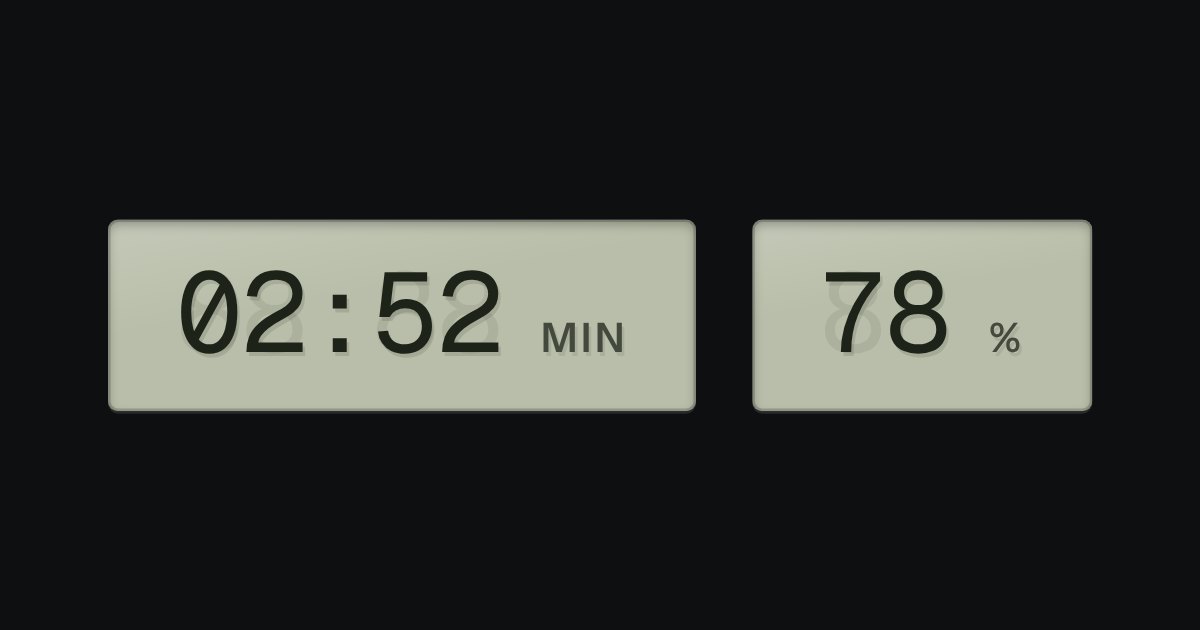
A value that changes, on grey-green liquid crystal, with a ghost of the unlit segments behind it: clocks, battery, counters.
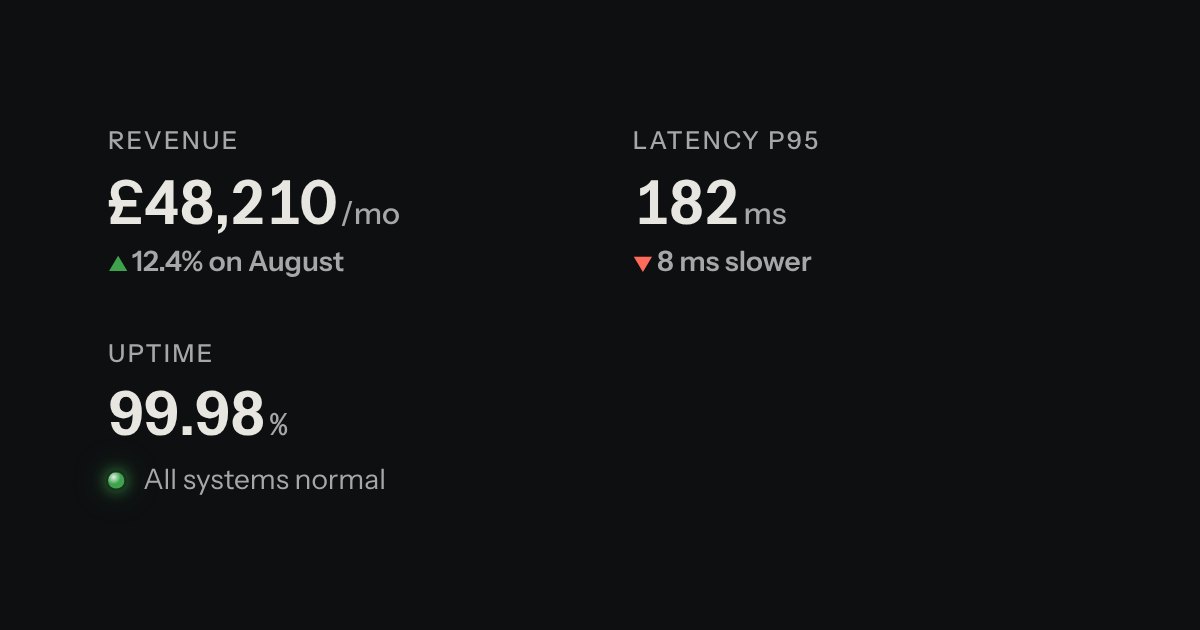
A printed label over a value: key figures, with the unit small and the change in words.
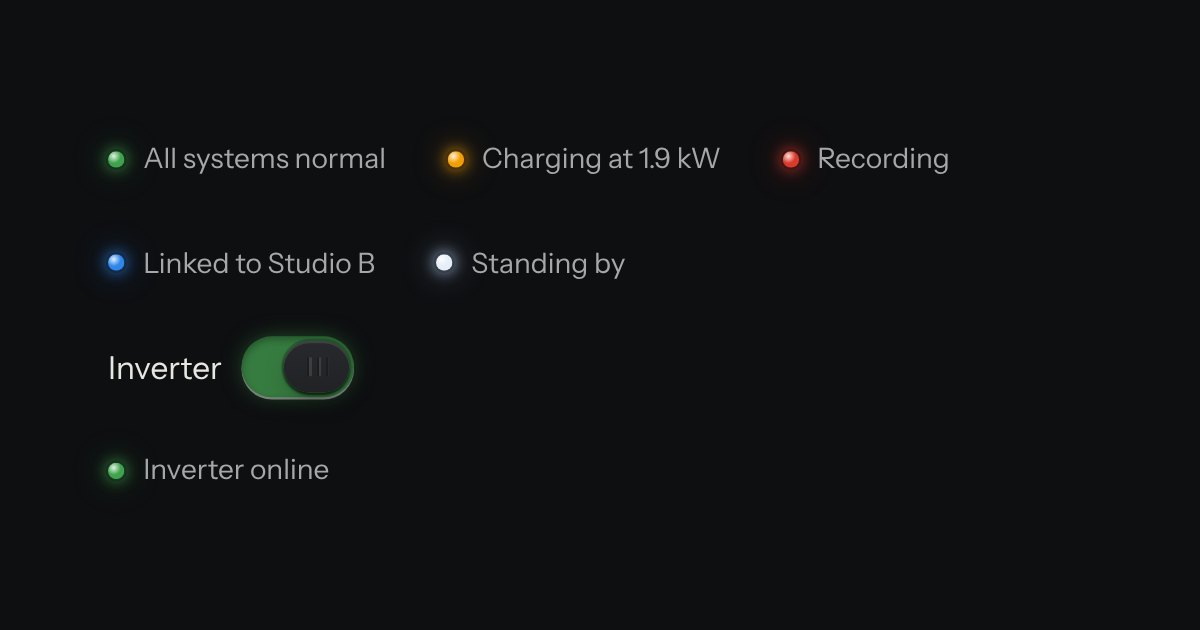
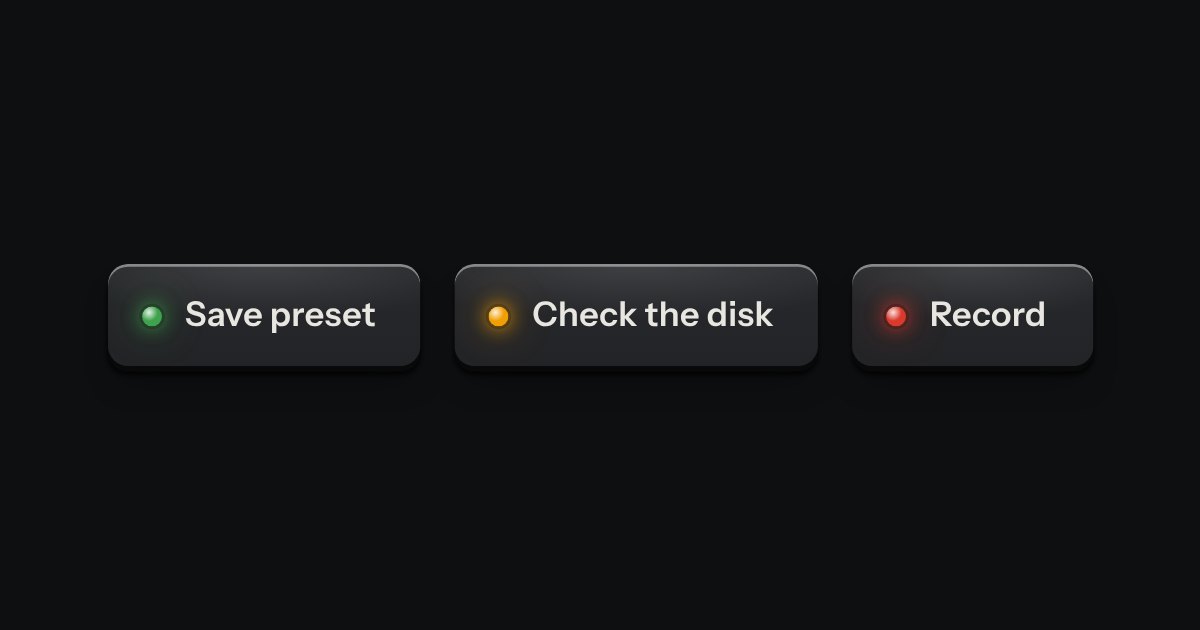
The only colour in the kit: a lamp that is on. Green is on, amber is waiting, red is recording or failing, blue is linked, white is standing by. Always next to words.
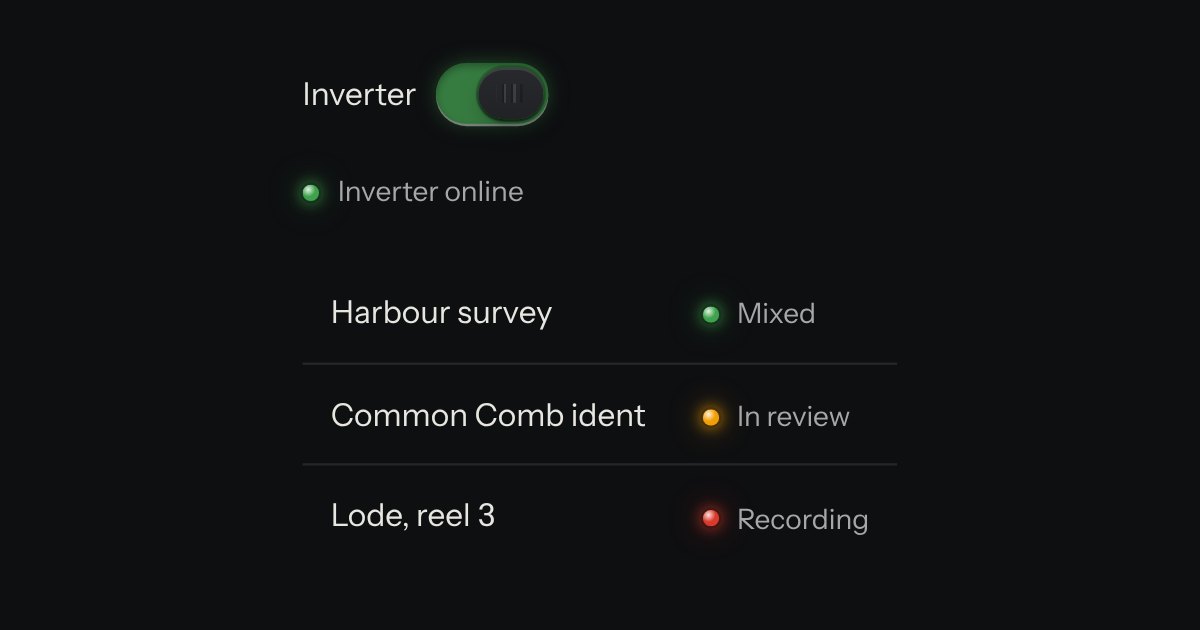
A lamp with words: the state line in tables, panel heads and lists. The words carry the meaning; the lamp is the glance.

A small printed plate: a type, a count, a badge. Solid for the one tag that must stand out.
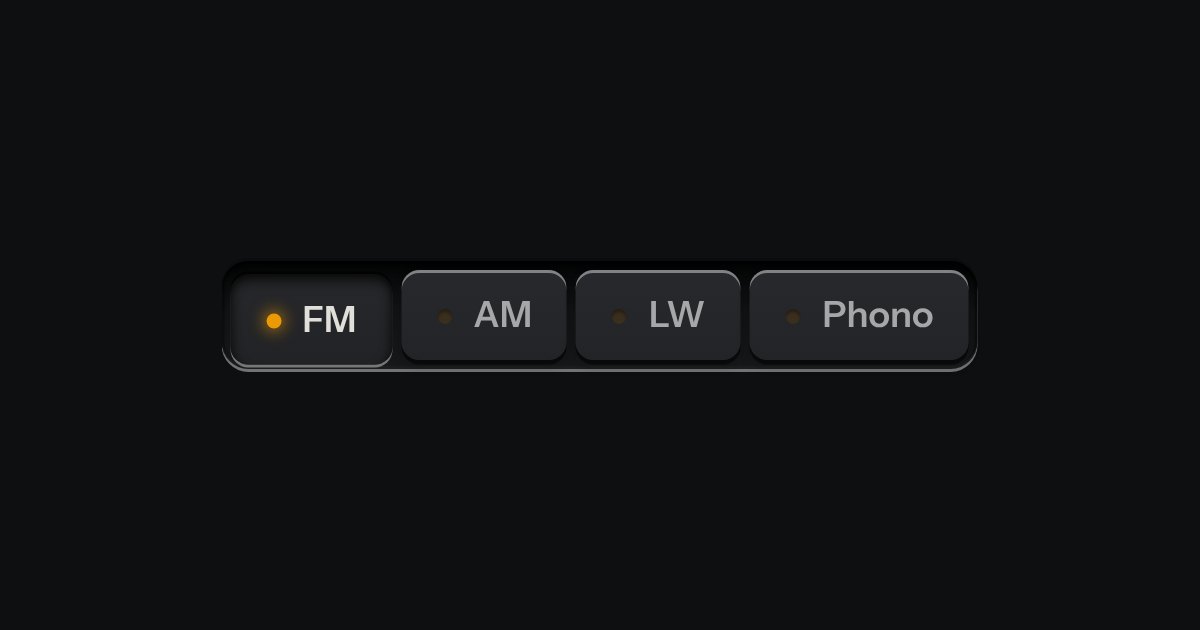
One mode of two to five: latching keys in a tray, one down at a time, each with a lamp that lights when chosen.
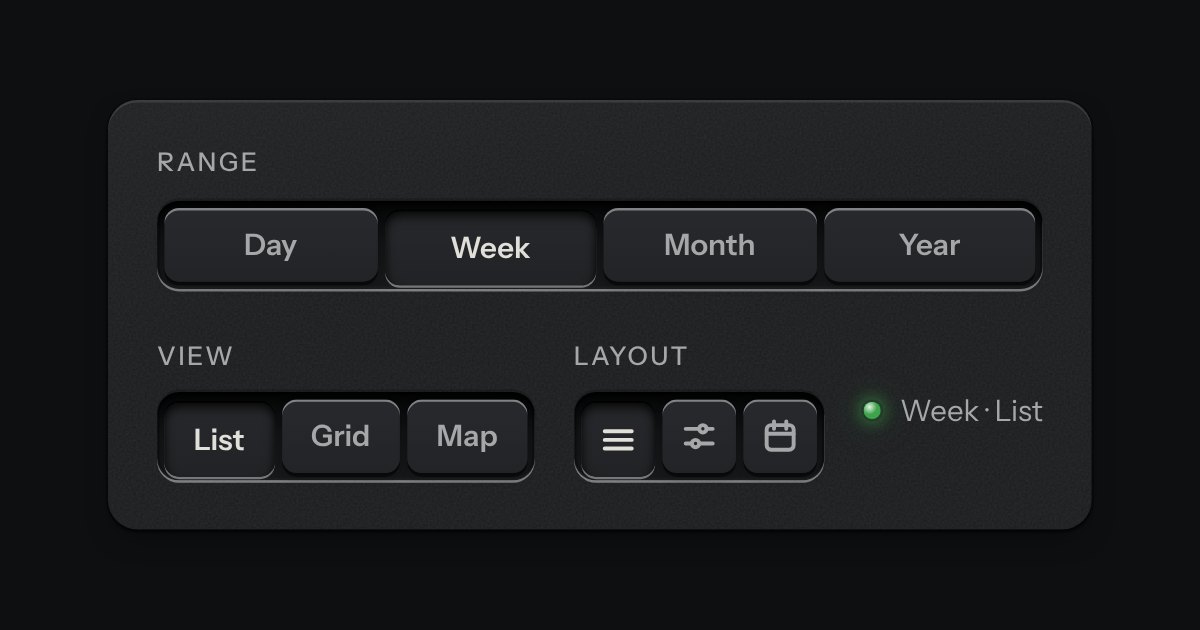
A row of keys in a tray with one pressed down: pick a view, a range or a mode and it applies at once. It is the kit’s selector without the lamps, with sizes, a full-width row and icon segments.
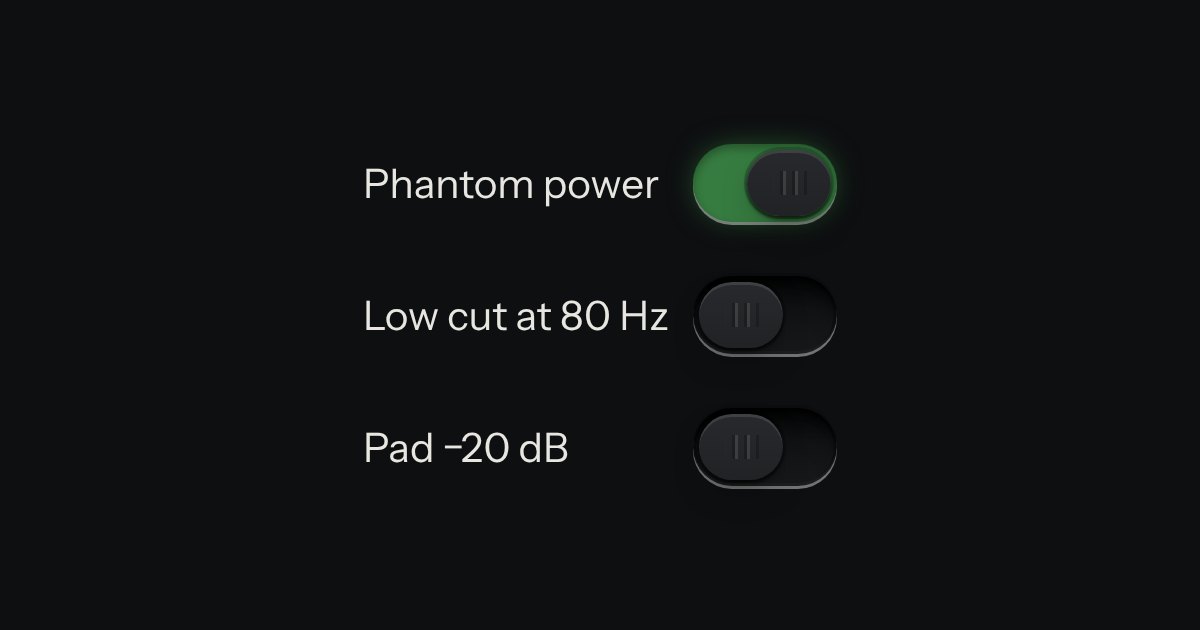
On or off, applied the moment it moves. A native checkbox with a ridged thumb in a slot that lights green when on.
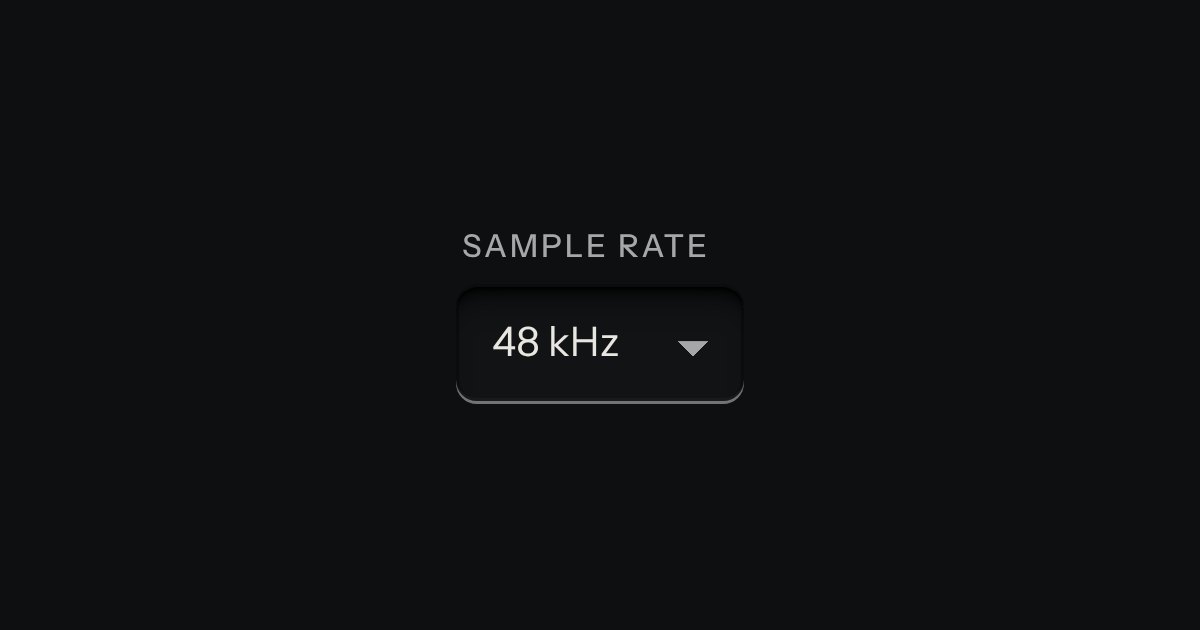
A choice from a longer list, in the same recess as a field, with a printed chevron. The browser’s own menu opens it.
A confirmation after an action.
Bar with the name, a status line that says what you hear and a Sound switch · a deck: panel head with the loop’s style as a tag, the loop’s name, Tempo on a large LCD in BPM, Bar · a channel: Trim, Hi, Mid and Low knobs with their values in dB, a Kill toggle key with a red lamp beside each EQ knob, Cue as a toggle key with an amber lamp, and an upright LED ladder beside the channel fader with its value in dB · the middle: the Master level knob, Listen to (Master, Cue) as a selector with lamps, Channel meters (To master, Input) as a plain segmented control, two upright ladders for left and right with a printed dB scale, the crossfader as a horizontal fader over a scale with A and B at its ends and both gains printed, and the curve (Smooth, Linear, Cut) as a selector · Volume and finish at the foot · the sound is WebAudio: each deck’s voices through its trim, a three-band split with a gain per band, the fader and the crossfader into the master, and a cue bus.