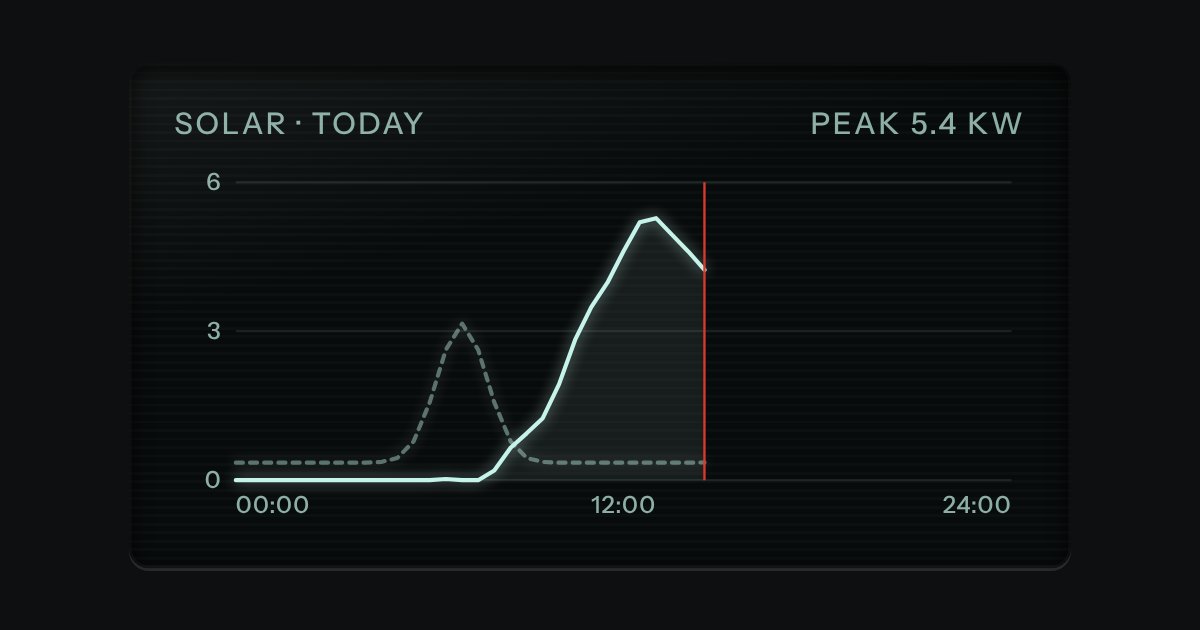
Glass
Dark display glass for plots and live readouts, whatever the finish around it. Everything printed inside it is lit.
Kit parts
A command prompt on dark glass. It is a display, not a shell: it prints what the page gives it, line by line, and keeps a scrollback to read back through. A bar along the top names it and carries one lamp, white while it waits and amber while lines are still arriving. Each line has a mark in its margin that says what it is (a command, a success, a warning or a failure), so a kind is never only a colour, and at the foot a block cursor waits at a prompt that does nothing. Under reduced motion every line arrives whole.
Seats open in 11 days. Want one email that morning?
Display glass with a scrolling screen of mono type. Each line is a two-column grid of mark and text; arrival is a clip-path wipe in whole steps with a delay that queues one line after another, set from a number of characters. The element is about ninety lines, most of it keeping the scrollback to its cap and the lamp amber until the queue is empty.
| Name | Kind | Description |
|---|---|---|
| label · prompt · max · height | attribute | The terminal’s name (the log’s accessible name), the text after the prompt’s mark, how many lines it keeps, and the screen’s height. |
| clear() | method | Empties the scrollback. The prompt stays. |
| lines · screen | property | How many lines it holds, and the log element. |
| terminalKind() · terminalLineHTML() · terminalDrop() · terminalTiming() · terminalHTML() | function | The kind a name means, one line’s markup, how many old lines to drop, how long a line takes to print and the whole terminal’s markup. |
Press Run the build: the command is typed after the prompt and the lines follow, with the lamp amber while they arrive. Tab to the screen and use the arrow keys to scroll.
Dark display glass for plots and live readouts, whatever the finish around it. Everything printed inside it is lit.
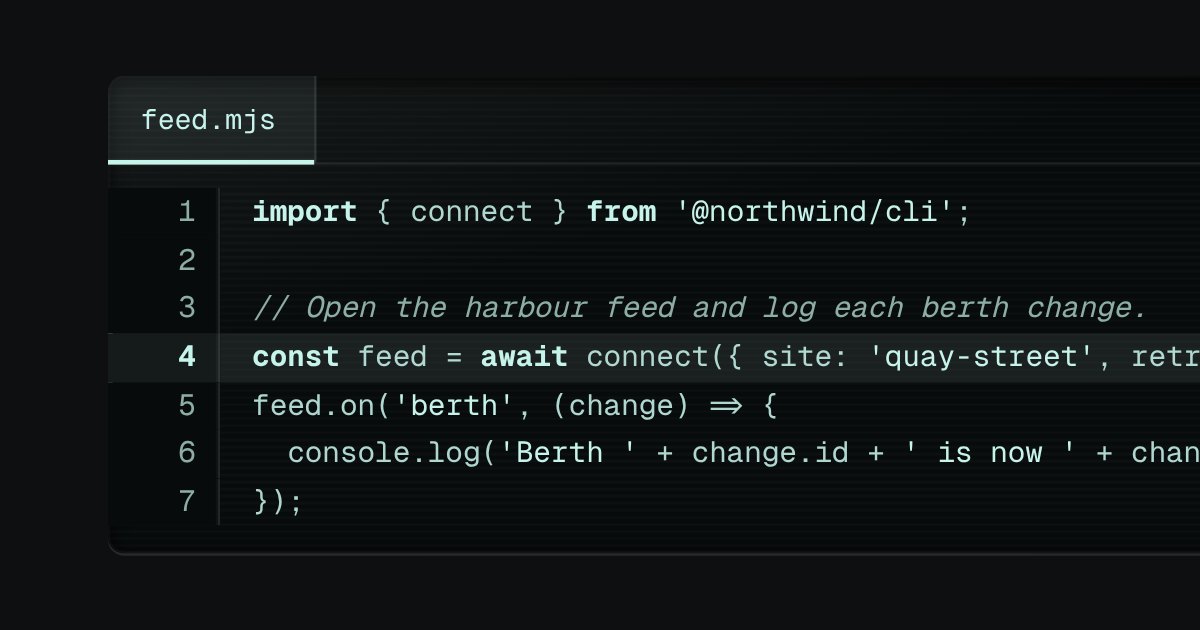
Code on display glass. A bar along the top holds the file name on a tab, with a lit edge under it, and the copy key at the far end. Under it the lines run, each with its number engraved in a gutter that stays where it is when a long line scrolls sideways. The numbers are drawn by the stylesheet, so they are never selected, never copied and never read aloud. Highlighting is optional and small: a few strengths of the display’s own light, told apart by weight and italic, never a colour of its own.
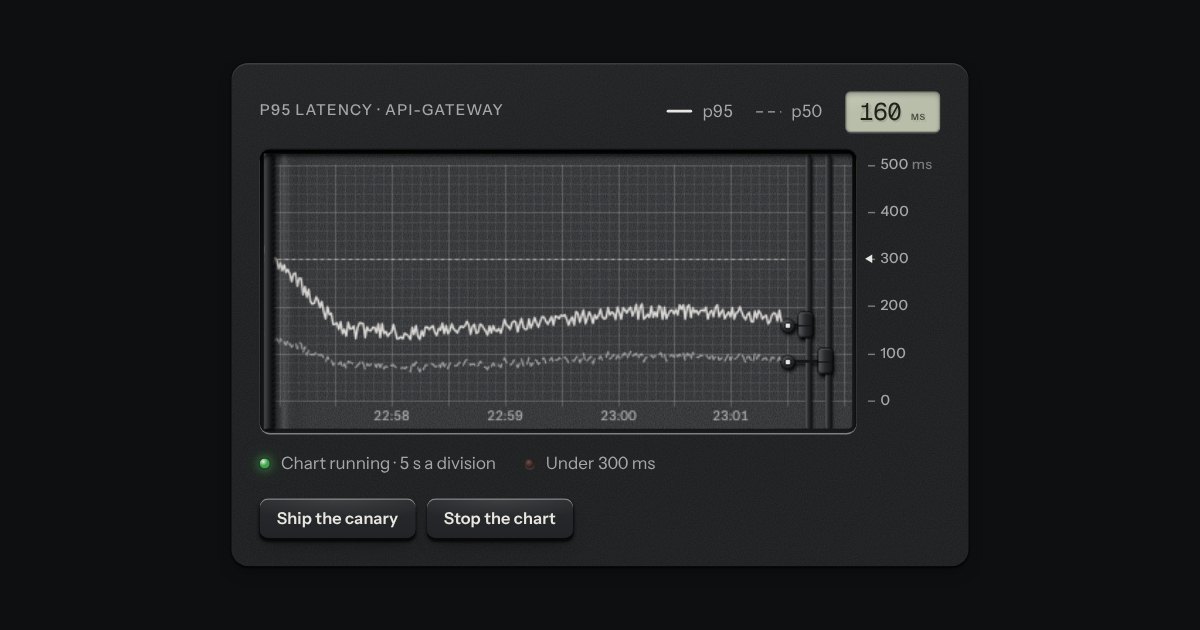
A strip-chart recorder: gridded paper advancing under a pen that rides a rail, drawing the live value as the paper moves and printing the time in the margin. For p95 latency, tokens per second, grid frequency, a cold room’s log.