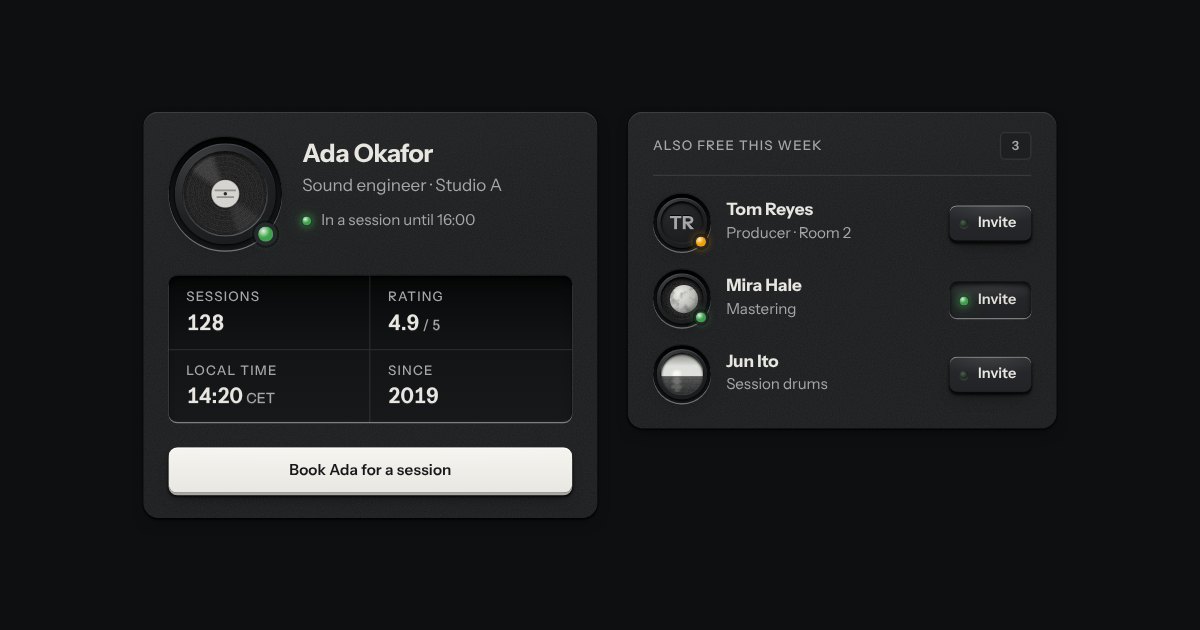
Profile card
A person’s ID plate: their coin set in a countersunk socket, name and role, a rating plate of facts engraved in tabular figures, and one key to act. Compact for one line.
Kit parts
A staff badge for a person. An engraved metal plate with a clip slot cut through its top edge, a photo well and the name, role and serial engraved beneath. With no photo, the initials are debossed into the well. A lamp shows whether they are online, away or offline, and the word is always printed beside it. A compact plate does the same in one line, for lists.
Seats open in 11 days. Want one email that morning?
One plate, drawn like the kit’s panel: a face with the bead-blast on it and a raised edge. The clip slot is a stadium cut through the top, the same recess as a field. The photo well is a recess a photograph is set into, and a rim over it shades its upper edge the way the avatar’s does, so a print looks set in, not stuck on. With no photo the initials are debossed: the letters are a shade darker than the well, the lamp catches the lower lip of every stroke and the upper wall is in shadow. Name, role and serial are engraved, which here means a light line under each letter. Corners are concentric. The compact plate is the same markup laid out again by its modifier: the foot dissolves into the row and the serial moves up under the role.
| Name | Kind | Description |
|---|---|---|
| p.__role | element | The name, a real heading, and the role under it. The heading level is yours. |
Pure markup: nothing here runs. The lamp and its word are two ways of saying the same thing.
A person’s ID plate: their coin set in a countersunk socket, name and role, a rating plate of facts engraved in tabular figures, and one key to act. Compact for one line.
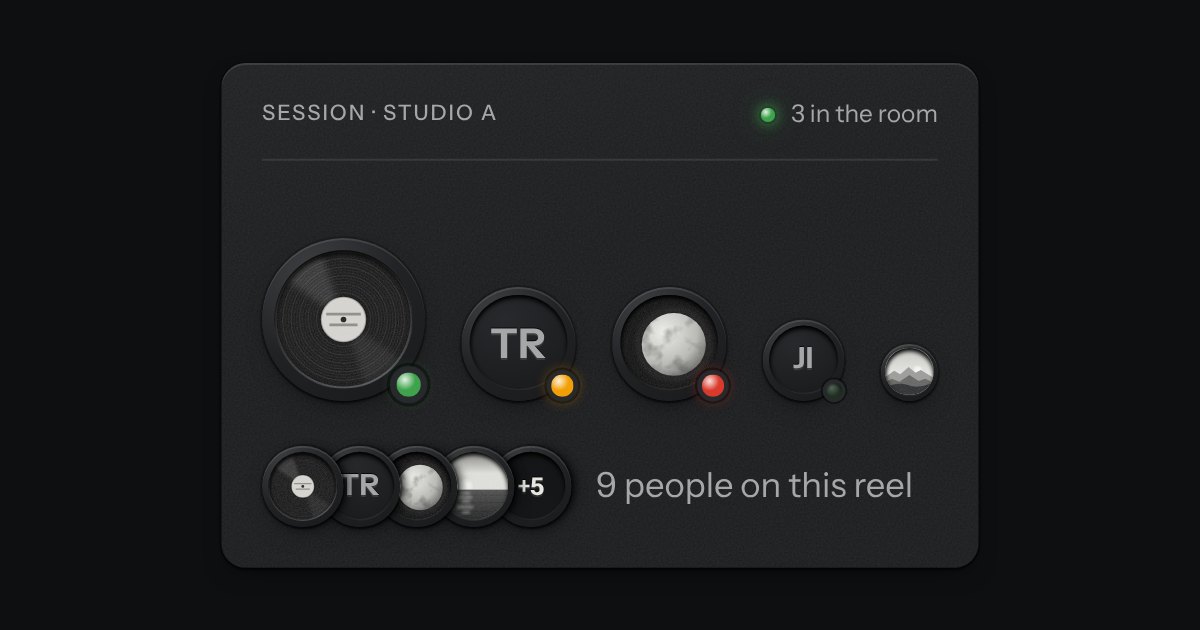
A person’s mark, struck like a coin: initials stamped into the field, or a photo set under the rim, with a status lamp mounted at five o’clock. Stacks into a group with a count.
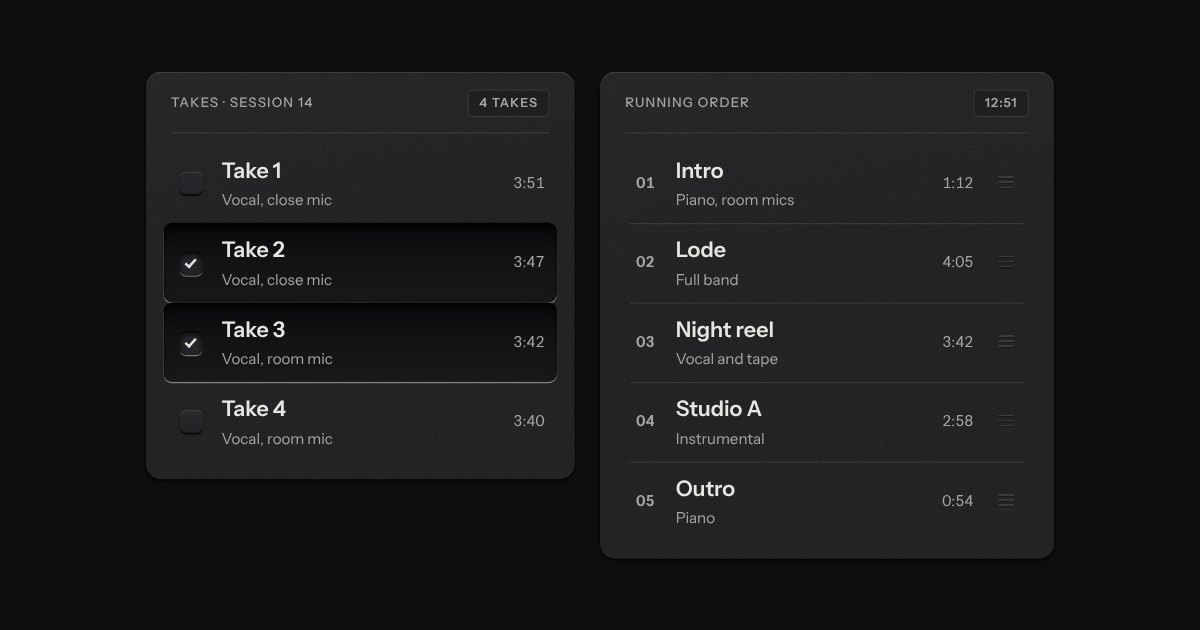
Rows in a rack: a mark, a title, a second line and a fact or a key at the end. Chosen rows sink into a recess with their check key latched; in a running order, a row lifts out of the rack on its skirt and slides past the others, from the keyboard or by its grip.