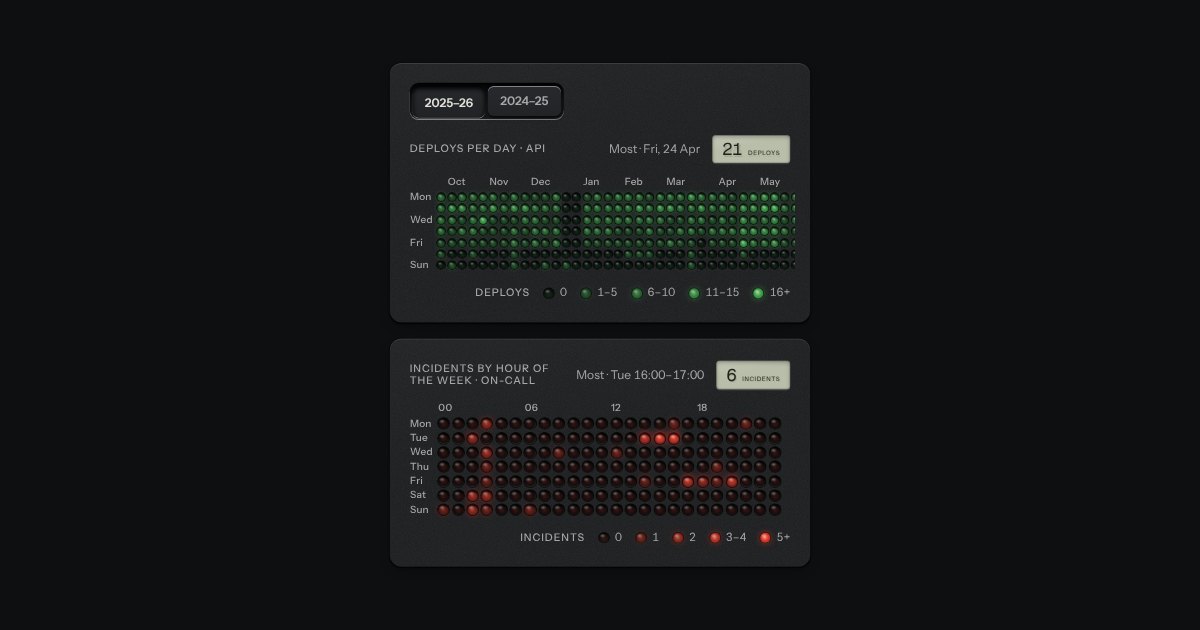
Lamp heatmap
A heatmap as a matrix of small panel lamps set into the plate: each lamp’s brightness is the value, off to full in four steps, with a printed legend. Deploys per day over a year, incidents by hour of the week, energy by the hour.
Kit parts
A row of ticks, one for each day or hour, on a strip of dark glass, each tick a lamp in its own slot, with the percentage on an LCD above. A lit green lamp is a period that was up; amber lit in the lower half only is one that was degraded; red lit across but cut by a slit is one that was down; a lamp that is out is a period with no reading. Move across the strip, or use the arrow keys, and the tick you are on is read out in words under it. A key below spells the four lamps.
Seats open in 11 days. Want one email that morning?
A strip of the same dark glass as the ladder, with one of the kit’s lamps in a slot for each period; the kit’s lamp is drawn the way each finish draws it, so a tick is a spot of colour on Paper and a lit pixel on AMOLED. The strip is a flexible row, so any number of ticks share the width, and the script is about sixty lines of arrow keys and a readout.
| Name | Kind | Description |
|---|---|---|
| uptimePercent() · uptimeSummary() · uptimeTickWords() · uptimeState() · uptimeStateText() | function | The share up (an empty string when nothing was read), the run in words, one tick in words, and the state a name means. |
Move the pointer along the strip: the readout under it names the day and how it went. Tab onto the strip and use Left, Right, Home and End. The red tick has a slit through it and says “down” in the readout and to a screen reader; the amber ones are half height.
A heatmap as a matrix of small panel lamps set into the plate: each lamp’s brightness is the value, off to full in four steps, with a printed legend. Deploys per day over a year, incidents by hour of the week, energy by the hour.
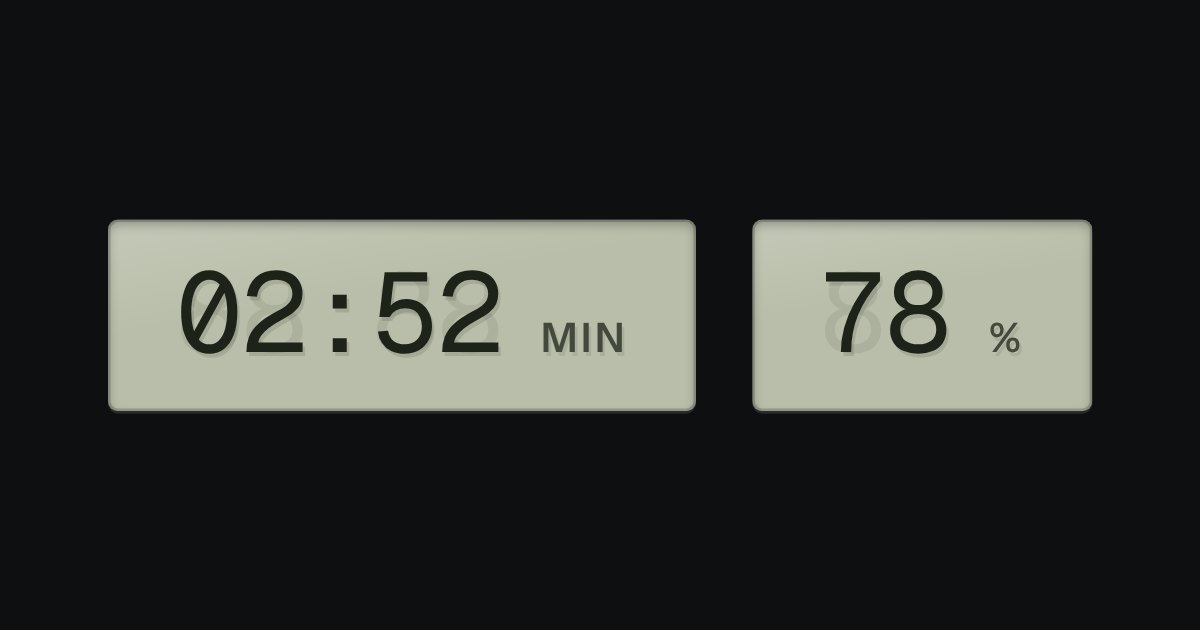
A value that changes, on grey-green liquid crystal, with a ghost of the unlit segments behind it: clocks, battery, counters.
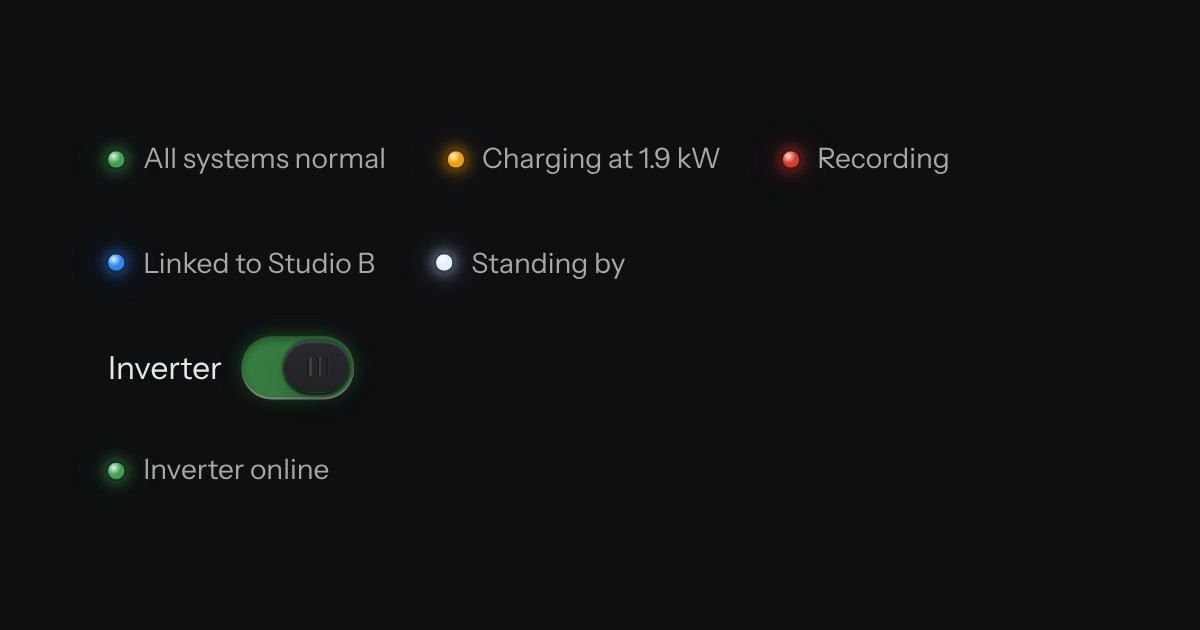
The only colour in the kit: a lamp that is on. Green is on, amber is waiting, red is recording or failing, blue is linked, white is standing by. Always next to words.
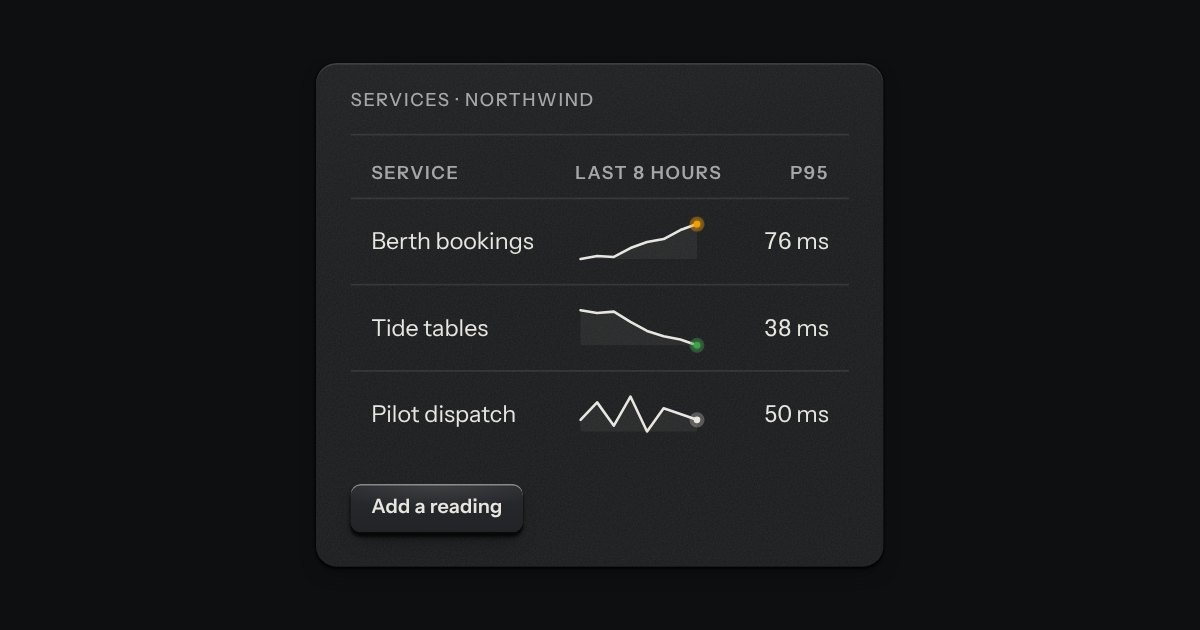
A word-sized line for the margin of a table or beside a readout. It is an SVG that takes the size of the type around it and the ink of the place it sits in, so on a panel it is ink and on display glass it is the display’s light. The last value is marked with a dot seated in a faint ring, and a lamp lights the dot when the reading matters. The trend and the last value are said in words on the image’s label, so the line is a second sign and never the only one.